
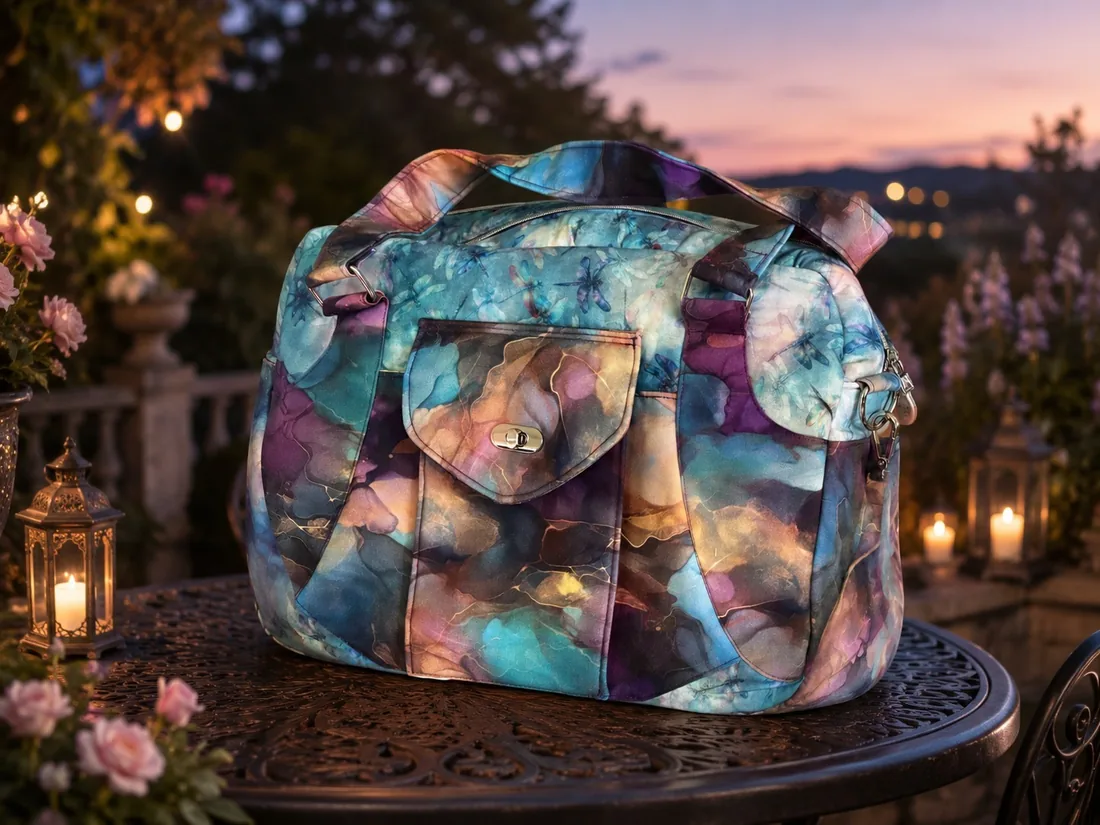
Luxury has often been associated with scarcity. But scarcity alone is not particularly meaningful. A product can be difficult to find because very few were made, because demand is high, or simply because production is temporarily limited.
One-of-one is different. It describes an object whose exact design is not intended to be repeated.
One-of-one is a design philosophy, not a numbered marketing run.
A limited edition might contain ten, fifty, or five hundred examples of the same design. A one-of-one piece begins with a different promise: this exact combination will exist once.
At The Carryline by Caroline, that means each Traveller receives its own name and place in the Carryline registry. When it finds its person, the exact design is not recreated.
The material gets to influence the piece.
Mass production works best when materials can be standardized. One-of-one work allows the opposite. A distinctive textile can become the reason a piece exists in the first place.
Pattern, tone, scale, texture, and mood can influence how a fabric is composed. Instead of asking a material to conform to a long production schedule, the maker can respond to what is interesting about that particular textile.
Individuality becomes visible without needing to be loud.
A one-of-one travel bag does not have to be eccentric. Individuality can be quiet: a particular marbled blue-grey, a garden-inspired print, an unusual pairing, or the way a pattern is positioned across the body of the bag.
The point is not to announce rarity from across the room. It is to give the owner the pleasure of knowing the piece is genuinely theirs.
Traceability adds meaning.
When a piece is made once, documenting it becomes part of the experience. A name, registry entry, and Certificate of Authenticity create a simple record of what the piece is and where it belongs in the collection.
That documentation does not create quality by itself, but it preserves identity. Years later, the bag is not merely “the blue one” or “the floral one.” It remains The Moonstone Haven Traveller, The Desert Wave Traveller, or another named piece with its own place in the Carryline story.
One-of-one does not automatically mean better.
This distinction matters. Rarity cannot compensate for poor materials, awkward function, or careless construction. A one-of-one label should never be used as a substitute for workmanship.
The value of one-of-one comes when individuality is paired with thoughtful making. The rarity is meaningful because the object itself deserves to be kept.
It changes the buying experience.
Standardized luxury makes comparison easy. You can research the model, choose a colour, and know another will be available later.
One-of-one asks for a more personal decision. Does this particular piece feel like you? Does the fabric speak to the way you travel, dress, or see beauty? If it does, there is a small sense of recognition in the choice — because there is no identical version waiting behind it.
And eventually, the story moves beyond the maker.
The maker begins the story, but the owner changes it. A travel bag gathers context: where it went, what it carried, who noticed it, which trips became important, and what memories accumulated around it.
That is why we think of Carryline pieces as companions rather than simply products. The one-of-one promise matters at the beginning, but the real uniqueness arrives through use.